Wong Kar-wai’s “In the Mood for Love” landed at number five on the BFI’s Sight and Sound 2022 Greatest Films of All Time poll, the biggest and most influential critics’ poll in the world, voted on by more than 1,600 international critics, programmers, and archivists. It’s also, unusually for a film this beloved, one that its own cinematographer never finished shooting. Christopher Doyle, six films into his partnership with Wong, walked off the production before the last frame was in the can. Nobody else got the memo, because the result doesn’t look like a film that changed hands mid-shoot.
A Fifteen-Month Shoot That Wore Out Its Own Cinematographer
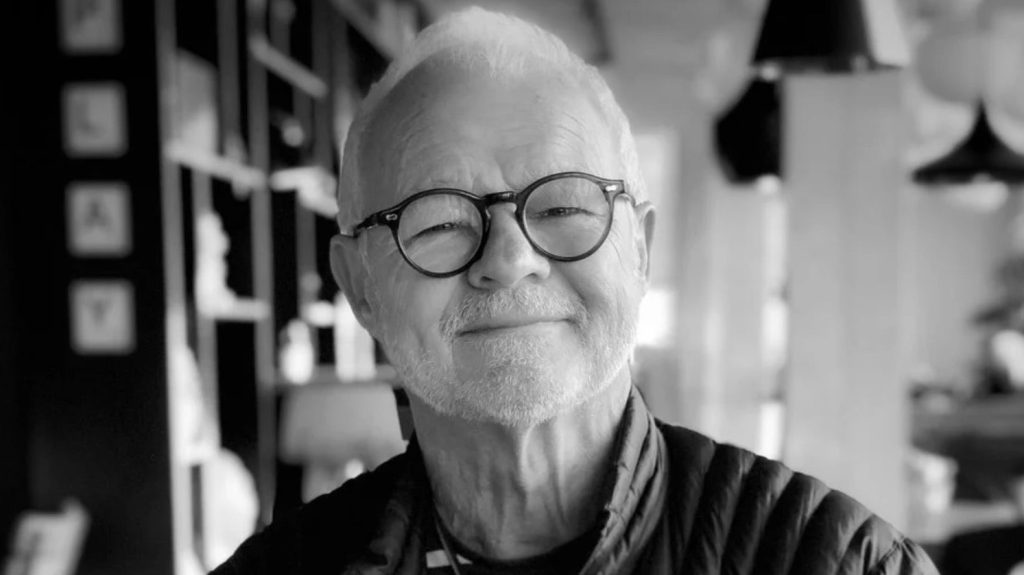
Wong is notorious for shooting without a finished script, discovering the film in the room with his actors rather than on the page beforehand, and “In the Mood for Love” took that approach to its limit. The production stretched to fifteen months, partly because of Wong’s process and partly because the Asian financial crisis kept disrupting the money. Doyle stuck with it for most of that run, but per accounts of the production, he eventually had to leave for other commitments once the schedule blew past anything reasonable. His departure wasn’t a falling-out over vision, by most accounts he was aligned with Wong’s spontaneous method in principle, it was the practical toll of reshooting the same key moments over and over across locations throughout Southeast Asia until Wong felt they were right. Mark Lee Ping-bin stepped in to finish the film and received equal credit alongside Doyle in the final cut.
Two Cinematographers, One Film That Doesn’t Show the Seam
What makes the handoff genuinely strange is how little it shows on screen. Doyle’s other work, with Wong and elsewhere, tends to be kinetic and restless, handheld, saturated, always moving. That style is largely absent from “In the Mood for Love.” The film that exists is built from longer, more composed, more patient shots, an approach more typically associated with Lee’s sensibility than Doyle’s. Rather than reading as two different films stitched together, the whole thing plays as a single, unbroken point of view, which is as much a testament to Wong’s editing and directing as it is to either cinematographer individually. It’s a rare case where losing your DP mid-shoot didn’t fracture a film’s identity, it just quietly changed hands.
What Doyle Actually Says About Losing Film’s Imperfections
Doyle’s own account of his craft, from a MovieMaker Magazine interview, cuts closer to what makes his work distinct than any single anecdote about “In the Mood for Love.” He describes his images as “lush, kinetic and highly textural, never sterile,” and he’s openly hostile to the idea that digital cleanup is an upgrade over what film naturally does: “That’s the great loss between digital and film. Film has the imperfections built into it, and now people are trying to correct the imperfections in a digital way, so now it just looks like digital TV.” The film itself backs that philosophy up. Per Wikipedia’s production notes, “In the Mood for Love,” like all of Wong’s work at the time, was shot on film, not digitally, and the texture that comes from that choice is doing real work in a movie that’s fundamentally about repression and unspoken longing. Grain and softness aren’t decoration here, they’re mood.
Why This Entry Still Catches People Off Guard
The 2022 poll made headlines mostly for its number one, Chantal Akerman’s “Jeanne Dielman,” the first film by a woman to top the list in the poll’s seventy-year history. Sight and Sound editor-in-chief Mike Williams called it a film that “challenged the status quo when it was released in 1975 and continues to do so today.” But “In the Mood for Love” sitting at five, ahead of “2001: A Space Odyssey” and “Mulholland Dr.,” is arguably the more interesting placement precisely because it’s not a provocation. It’s a film critics simply love, one made in real Hong Kong apartments so cramped Doyle has said there wasn’t even room for a tripod, shot over a production so long it outlasted its own cinematographer, and it still reads as one of the most controlled, deliberate pieces of visual storytelling ever put on a critics’ ballot.
The Texture Was Never the Accident
Doyle’s complaint about digital cleanup erasing film’s imperfections is worth sitting with, especially for anyone editing today. “In the Mood for Love” didn’t become a top-five film despite its grain, its long takes, or its two-cinematographer production history, it became one because every one of those supposedly messy realities got folded into the film’s actual meaning. That’s the harder craft lesson underneath the trivia: texture only works when it’s earned by the story, not applied on top of it.
Sources: