Photo: HAL Picture, via CineD
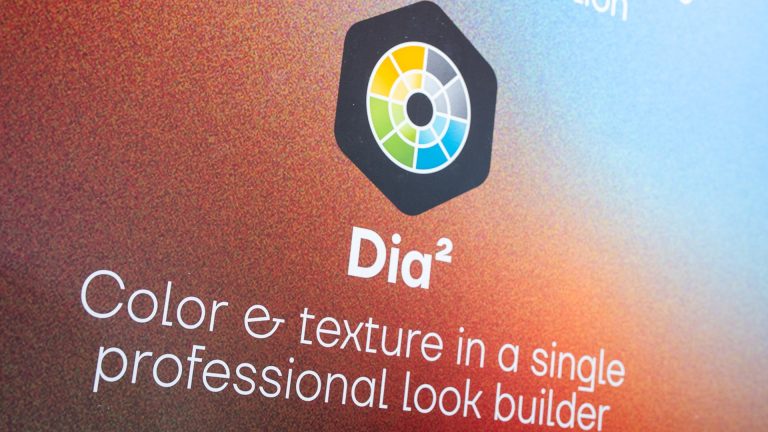
HAL Picture, the plugin arm of the Paris post house Polyson, has spent the past year selling colorists on a strange proposition: split look development into two separate tools, one for color and one for texture, and make both mathematically rigorous enough to survive a full feature. Now the company is folding them back together. Dia Squared, shown at IBC 2026, merges Diachromie and Diaphanie into a single OpenFX plugin with fewer sliders, while the two original plugins stick around as the deep-end version of the same engine.
If you haven’t run into HAL Picture’s work, the split makes sense once you know who built it. Diachromie handles parametric color-look construction; Diaphanie handles texture, a procedural grain engine, halation, diffusion, and a spatial equalizer for sharpness. Both came out of Polyson’s in-house R&D under DIT Olivier Patron and cinematographers Martin Roux and Paul Morin. Both plugins won the Innovation Award at the 2026 César & Technical Awards, and by HAL Picture’s own account they’re now used on French features after a long beta. This isn’t a bedroom-coder LUT pack. It’s tooling built by people who sit in a DIT cart for a living.
Why Split the Tool in the First Place
Resolve already has a deep grading toolset, so CineD’s Johnnie Behiri asked the obvious question: what’s missing? Patron’s answer, reported in CineD’s writeup, is that grading and look creation are different jobs entirely. Grading works shot to shot, chasing exposure and balance. A look gets built once per show and has to hold across day and night scenes, SDR and HDR masters, and every delivery format downstream. Diachromie and Diaphanie were built for that second job specifically, which is also why they ended up dense with parameters that a working DP has no patience for on set.
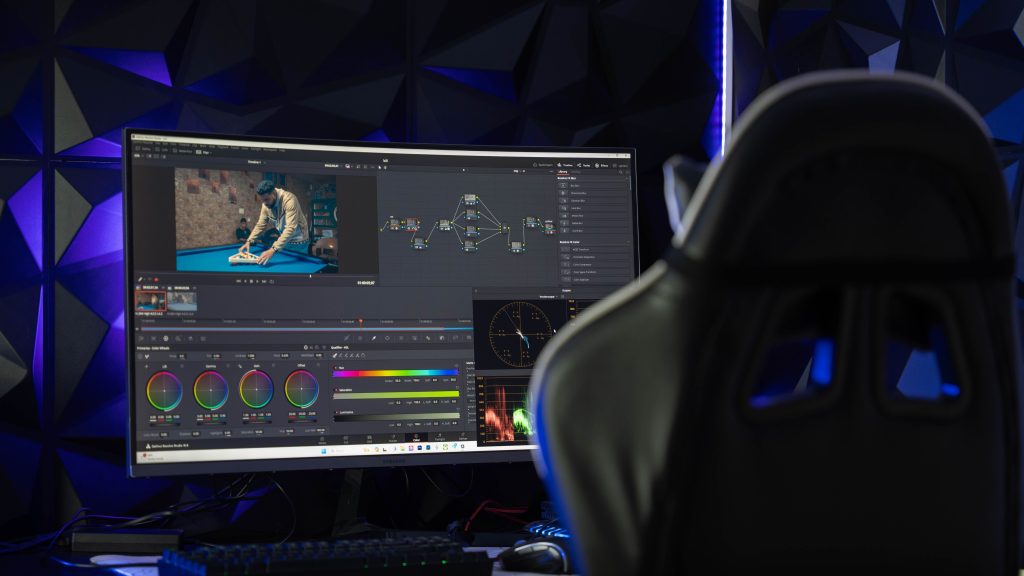
That density is what Dia Squared solves. Patron described the intended handoff to CineD: a colorist builds a look from scratch in Diachromie and hands off the preset. A DP, or anyone who’d rather talk about the image than wrestle color sliders, opens the same preset in Dia Squared and nudges it with a reduced control set, pulling back the reds a touch, say. If they need to go further than Dia Squared allows, the preset goes back to the colorist to finish in Diachromie. Presets move freely in both directions because the processing underneath is identical. Engineer Antoine demonstrated this live in Resolve, running Diachromie and Diaphanie on separate nodes next to Dia Squared loading the same two presets. Same image, different number of knobs.
Grain and Halation Now Show Up On Set
The feature that matters most for anyone shooting, not just cutting, is new Pomfort Livegrade support. Before this, there was no way to preview HAL Picture’s texture work, the grain, halation, diffusion, and vignetting, on a monitor during the shoot. With Livegrade integration, a DP can see that texture live on multiple outputs and judge the final image on the day instead of guessing how much halation survives the DI. That’s a real gap closed. Plenty of colorists can dial in gorgeous grain in the suite; almost none of it is visible to whoever is framing the shot months earlier.
HAL Picture is also shipping a locked light version below Dia Squared. It can’t exchange presets with the flagship plugins and only loads HAL Picture’s built-in looks, adjustable within limits. It’s also not log-to-log, working directly to Rec.709 or HDR instead. Baselight and Resolve get full support across Windows, macOS, and Linux; Premiere Pro isn’t supported yet, though Antoine told CineD it isn’t ruled out, and Nuke is still just a conversation.
Pricing and Timing
Dia Squared will run €850 as a perpetual license, with an annual subscription option alongside it. The light version is perpetual-only at €250. Diachromie and Diaphanie stay on the market too, at €1,100 each or €1,950 bundled. None of this is cheap, but it’s priced like the professional tool it is, not a Black Friday LUT bundle. HAL Picture says a closed beta starts in the coming weeks with release planned for fall, so Dia Squared isn’t shipping yet. It’s the product the company is now committed to building in public.
Procedural Versus Scanned Grain Is Still a Real Choice
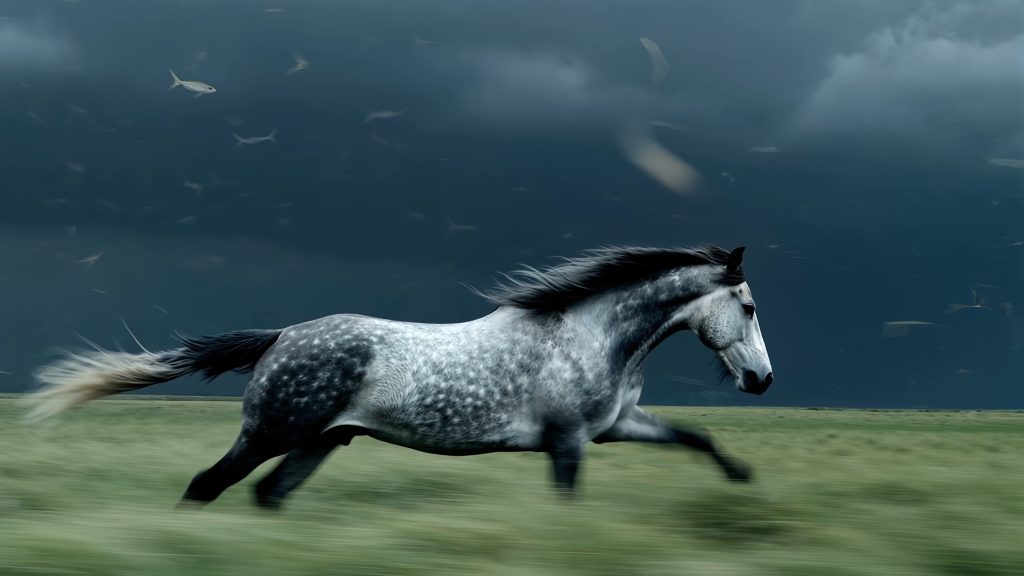
Worth noting for editors outside Baselight suites: Diaphanie’s grain engine is procedural, built to replicate organic randomness through algorithms rather than sampled film scans. That’s legitimate and elegant when consistency across thousands of shots matters more than any single frame. It’s also a different philosophy than working with real scanned texture, the route overlays like our own 4K 35mm Real Film Grain Texture take: actual grain captured off film stock, dropped onto a timeline in Premiere, Resolve, or FCP with no plugin license or closed beta required. Neither approach is more correct. They’re just two answers to the same problem HAL Picture is chasing at the high end: making grain feel earned instead of applied.
What Dia Squared actually proves is that the industry hasn’t settled the debate between “grade the look” and “build the look” workflows, and the studios doing the most interesting work on texture are the ones treating grain as infrastructure, not garnish.
Sources:
HAL Picture Dia Squared Introduced — Johnnie Behiri, CineD (September 21, 2026)
About Us — HAL Picture
Diaphanie product page — HAL Picture
Inside HAL Picture’s Refreshing Approach to Look Development — American Society of Cinematographers