Somewhere in a boardroom in the south of France, someone looked at 130 years of cinema and said: “You know what this industry needs? A label. Like on a carton of eggs.”
That’s not a joke. On April 9, 2026, the 79th Festival de Cannes announced that films where generative AI drives scripting, visual generation, or principal performance synthesis are ineligible for the Palme d’Or and the Official Competition. Festival President Iris Knobloch dropped the line of the year doing it: a film is a personal vision, not an assembly of data. General Delegate Thierry Frémaux then topped his own boss by floating an actual “organic” certification for movies — so audiences can check the label before buying popcorn, the same way they’d check for a non-GMO sticker.
Cinema. Now comes with a nutrition facts panel.
Jokes aside, this is a genuinely big deal, and it’s not happening in a vacuum. Academy President Janet Yang used the same festival to call for guardrails before generative AI gets baked into how movies are made. DGA President Christopher Nolan is reportedly walking into contract negotiations with the exact same principle: directors keep the authority, AI doesn’t. Cannes just handed that argument a very expensive megaphone.
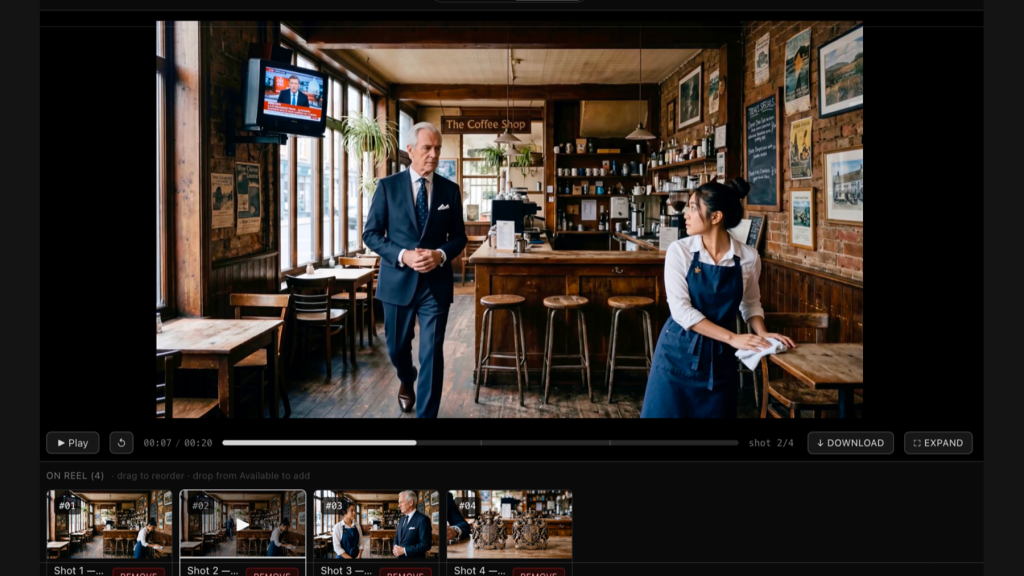
Here’s what almost nobody covering this story is saying out loud, though: none of you reading this are competing for the Palme d’Or. The “banned vs. allowed” framing is a story about maybe 20 films a year. The other 99.9% of production — yours, ours, everyone’s — lives in the enormous, unglamorous middle: using AI somewhere useful in the pipeline, while still needing the final footage to look like a human being was actually in the room.
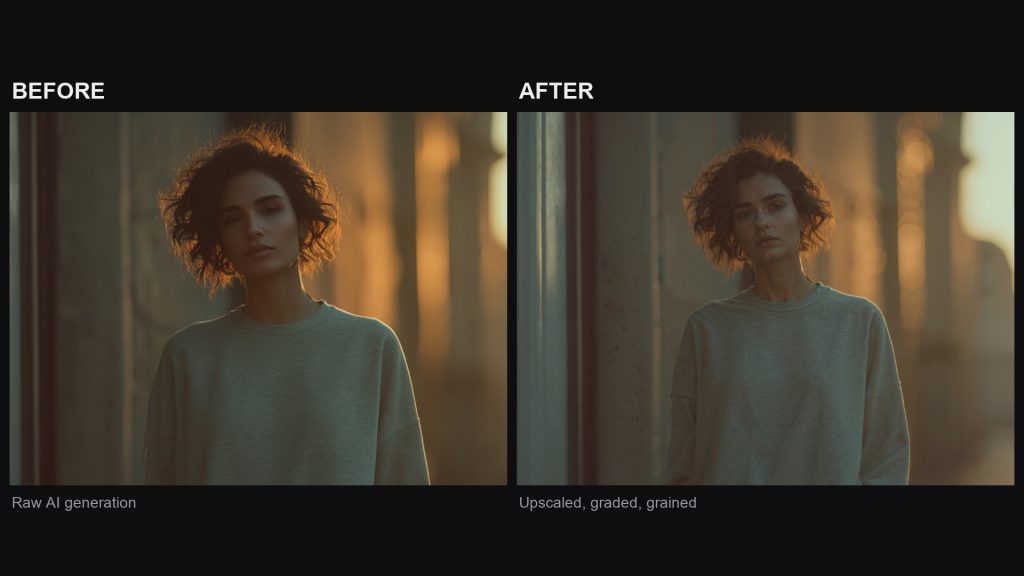
That’s the real gap, and it’s not going away no matter how many certification labels get proposed. You shouldn’t have to choose between “I used a generative tool because it saved me three days” and “my footage looks like it was assembled in a server rack.” Grain, halation, and honest photographic imperfection are the actual visual language of “a person made this” — completely independent of what touched your timeline along the way.
Cannes wants to solve this with a stamp. We think the better move is solving it in the image itself.