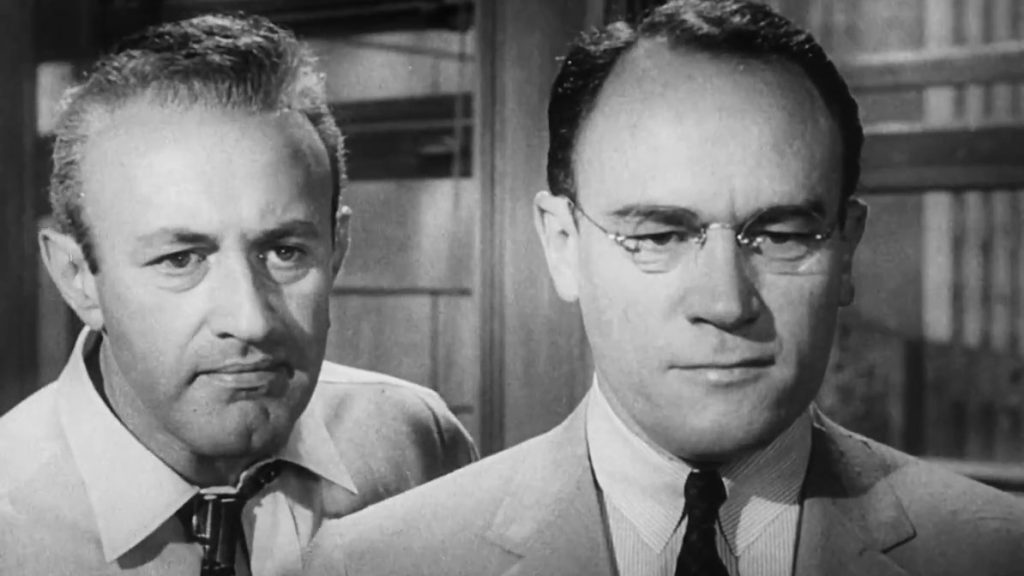
Grain used to be earned, not dialed in. Se7en, Saving Private Ryan, and Traffic — three of the most visually distinct films of the 1990s — each built their grime and grain into the negative itself, through brutal, specific lab chemistry, years before anyone had a grain slider. Darius Khondji, Janusz Kamiński, and Steven Soderbergh (credited as cinematographer under his “Peter Andrews” pseudonym) have all gone on record about exactly what they did to the film stock, and the recipes are stranger and more manual than most editors assume.
Kamiński Stripped The Coating Off His Own Lenses
For Saving Private Ryan, Janusz Kamiński, ASC shot on Eastman Kodak EXR 5293, pushed one stop to a 400 ASA rating, occasionally pushing two stops to 800. “Pushing the film shifts the contrast and makes it easier to burn the highlights out,” he told American Cinematographer’s Christopher Probst, ASC. The real weapon was ENR, a bleach-bypass process that leaves silver in the emulsion. Kamiński ran roughly 70 percent ENR on the negative. “The biggest thing about ENR that no one seems to be talking about is what it does to the highlights and colors,” he said. He also had Panavision strip the protective coating off older Ultra Speed lenses: “the contrast became much flatter,” he explained, and “it’s much easier to get flares, which automatically diffuses the light.” He shot much of the film with the shutter set at 45 or 90 degrees, the tighter angle especially for explosions, and flashed the negative at about 15 percent, “so that I didn’t get totally sharp blacks. I was looking for a slightly flatter look.”
Khondji Ran Se7en’s Blacks Through A Process Called CCE
Darius Khondji built Se7en‘s suffocating look from the opposite direction. “We had to underexpose many of the interiors by two stops on a film negative that was quite contrasty,” he explained in the American Cinematographer excerpt from Conversations with Darius Khondji. To get the ink-black shadows David Fincher wanted, Khondji pushed further at the lab. “To get the blacks the way we wanted — to make them that India ink black — we used a bleach bypass process on the prints, working with Beverly Wood at Deluxe. The process was called CCE,” he said. “CCE was a little more radical than the others, and to get those beautiful blacks, it would drain out a lot of the color.” The desaturation wasn’t an accident of the process. It was the entire point.
Soderbergh Gave Traffic Three Separate Chemical Personalities
Steven Soderbergh took the boldest swing: three storylines, three distinct film recipes, cut together in one movie. For the East Coast plotline: “tungsten film with no filter on it so that we get that really cold, monochrome blue feel.” For San Diego: “diffusion filters, flashing the film, overexposure for a warmer blossomy feel.” For Mexico: “tobacco filters, 45-degree shutter angle whenever possible to give it a strobelike sharp feel,” he told DGA Magazine’s Darrell Hope. The Mexico footage then got duped through Ektachrome on top of that treatment: “we’re going camera-negative, timed answer print, then Ektachrome dupe of that answer print… it will have gone through seven generations,” Soderbergh said, each generation adding more contrast and grain. He never apologized for the abuse. “I’m in love with degraded grainy contrasty imagery, stuff that I think you’d have difficulty talking some cameraman into doing.”
The Chemistry Was Never Neutral
None of these three were chasing realism. Kamiński’s ENR and stripped lenses were about making a war film feel unstable and unstaged. Khondji’s CCE was about draining hope out of a frame before a character says a word. Soderbergh’s three-stock trick let an audience know which country they were in before a single caption appeared. Grain, pushed contrast, bleach bypass: none of it was texture for its own sake. It was direction, cut straight into the negative, and every one of these filmmakers can still tell you exactly why they chose the stop, the angle, the chemical.
Sources: