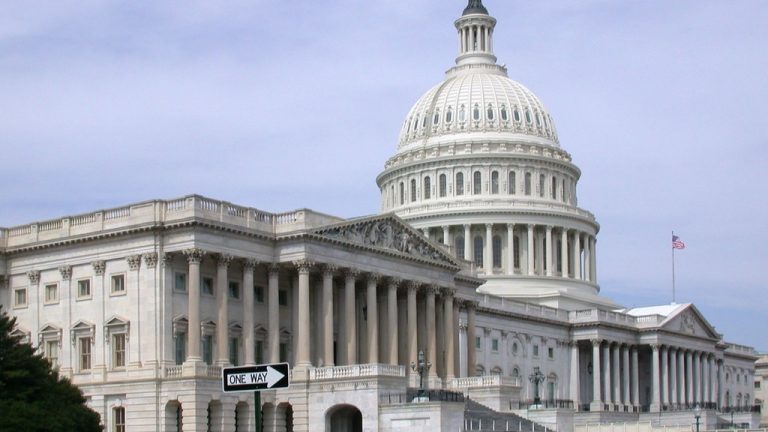
The Motion Picture, Television, and Entertainment Revitalization Act landed in Congress this week, and for once a Hollywood tax bill doesn’t treat editing, color and visual effects as an afterthought. Introduced by Sens. Tim Scott (R-SC) and Adam Schiff (D-CA) alongside Reps. Nathaniel Moran, Linda Sánchez, Brian Jack and Laura Friedman, the bipartisan, bicameral bill would create the first federal production tax credit in U.S. history, and it explicitly writes post-production and VFX work into the formula rather than leaving it to trickle down from a production’s main budget.
What The Bill Actually Pays For
The base structure is a 20% credit on qualifying U.S. labor costs for film, television and VFX projects, stackable up to 30% through bonus uplifts: an extra 5% for independent productions, another 5% for projects filming a meaningful share of principal photography in rural opportunity zones or federally declared disaster areas, and a further bump for productions spreading work across ten or more states. Projects need a minimum $1 million budget and have to shoot at least 75% of their principal photography days domestically. Live sports, daytime dramas, talk shows, news programming, advertising and social media content are all carved out, according to reporting by CPA Practice Advisor.
Why Post-Production Finally Gets A Seat At The Table
Here’s the part that should matter to anyone who spends their days in a bay rather than on a set: the bill explicitly makes standalone VFX and post-production work eligible on its own, not just as a line item inside a larger production’s budget. As TheWrap’s Jeremy Fuster reported, a visual effects house or an editorial shop can qualify directly, provided at least 75% of the costs for that VFX or post work are incurred in the U.S. That’s a meaningful shift. Most state incentive programs have historically rewarded where a camera rolled, not where a cut got finished or a grade got locked, which is a large part of why so much finishing work has drifted to Canada, the U.K. and elsewhere even when principal photography stayed stateside.
IATSE International President Matthew Loeb didn’t mince words about what’s at stake. “IATSE has long called for a globally competitive, labor-based federal production incentive to level the playing field for American workers, return middle-class film and television jobs to America, and keep them here at home,” Loeb said in a statement, adding that the bill addresses “the dramatic loss of tens of thousands of American jobs in motion picture production and post-production,” per IATSE’s own release. He called swift passage “our foremost federal legislative priority.” Rep. Friedman, who says she spent more than a year assembling the coalition behind the bill, put the pitch to other countries bluntly: “This bill is a result of that coalition. It tells every country that has been outbidding us for American work that we are done losing.”
The Money, The Studios, And The Politics
The industry’s biggest players lined up fast. Motion Picture Association Chairman and CEO Charles Rivkin called the bill “a true gamechanger for American creators, workers, and businesses,” projecting it could inject $250 billion into the economy and generate roughly 145,000 new jobs a year, according to TV Technology’s George Winslow. SAG-AFTRA President Sean Astin said the union was “proud to partner with our fellow unions, industry and policymakers in a bipartisan effort to rescue the domestic film and television business.” Paramount CEO David Ellison and NBCUniversal Entertainment Chairman Donna Langley both issued supportive statements, and actor Jon Voight, who has served as one of the administration’s informal Hollywood liaisons, was among those present when the bill was unveiled, per Rep. Friedman’s press release.
President Trump had already primed the ground weeks earlier, writing that “Congress should approve, immediately, a Federal Production Incentive to create Entertainment Jobs in America,” a Truth Social post confirmed by Fox 10 Phoenix’s Daniel Miller. Sen. Schiff struck a similarly urgent note, telling CNN “this is the best opportunity now we’ve had to get this done in really decades,” while cautioning that “negotiations are ongoing,” according to Deadline’s Ted Johnson and Dominic Patten.
What Could Still Kill It
Johnson and Patten’s Deadline reporting lays out the real obstacles: a legislative calendar that’s short on session days before the midterms, meaning the credit more likely gets attached to a year-end funding package than pass on its own. A Congressional Budget Office score that has to show the incentive is generous enough to actually beat out the U.K., Australia and Canada without blowing up the deficit case. An unpredictable White House that backed the idea but could just as easily walk it back if some unrelated entertainment-industry feud sours the mood. And a messaging fight already underway, with conservative outlets including the Wall Street Journal framing the credit as a “bailout to an elite industry dominated by the left,” which is exactly why red-state sponsors like Moran and Jack were brought in up front.
None of that guarantees passage. But it’s the first time a federal bill has treated the edit bay and the color suite as production infrastructure worth subsidizing in their own right, not just overhead that happens after the “real” work wraps. For the editors and colorists who’ve watched finishing work get chased overseas for a decade, that distinction is the whole story.
Sources:
CPA Practice Advisor, Samantha Masunaga and Ana Ceballos (LA Times/TNS) — “Hollywood Would Get 20% Federal Film Tax Credit Under Proposed New Bill” (Sept. 24, 2026)
TV Technology, George Winslow — “MPA, Unions Back ‘Motion Picture, Television, and Entertainment Revitalization Act'” (Sept. 24, 2026)
TheWrap, Jeremy Fuster — “Federal Film Tax Credit Introduced in House, Offering Film and TV Shoots Up to 30% Incentive” (Sept. 24, 2026)
IATSE — “IATSE Lauds Introduction of Motion Picture, Television, and Entertainment Revitalization Act, Urges Swift Passage” (Sept. 24, 2026)
Office of Rep. Laura Friedman — Press Release (Sept. 24, 2026)
Deadline, Ted Johnson and Dominic Patten — “Federal Film Tax Incentive Faces 5 Major Hurdles Before Passage, Including Trump” (Sept. 9, 2026)
FOX 10 Phoenix, Daniel Miller — “Trump Calls For Boost To Film, TV Production With Tax Incentives” (Sept. 2, 2026)