Canon announced the EOS R8 Mark II this week, a full-frame mirrorless update that arrives with a strange headline for 2026: the sensor stayed exactly the same. Where the EOS R6 line jumped to a 32.5-megapixel chip, the R8 Mark II keeps the original R8’s 24.2MP full-frame CMOS sensor, unchanged. Canon clearly decided the R8 line’s job isn’t resolution. It’s price, weight, and now, finally, stabilization.
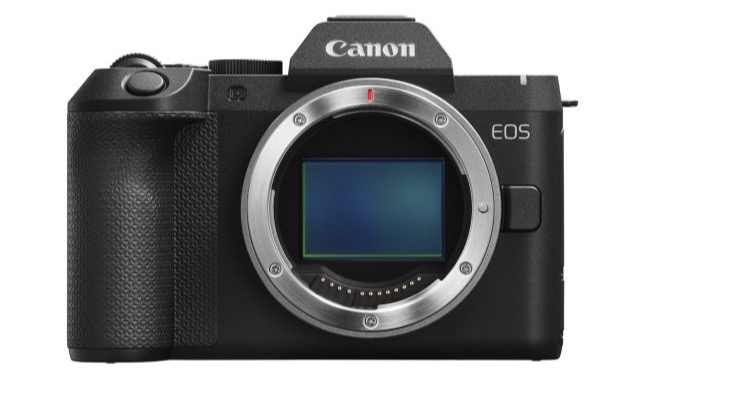
Photo: Canon, via Newsshooter.
A Deliberate Non-Upgrade
CineD’s Nino Leitner flagged the sensor decision as the clearest signal of how Canon is segmenting its own lineup: the R8 Mark II “keeps a 24.2-megapixel full-frame CMOS sensor” specifically while the R6 series has moved to 32.5MP. That’s not an oversight, it’s a fence. The R8 Mark II is staying the compact, budget-conscious hybrid body, and Canon would rather sell you an R6 III if you actually need the extra resolution. For anyone shooting run-and-gun documentary, interviews, or solo-operator narrative work, that’s a reasonable trade. Fewer pixels means smaller files, faster ingest, and less strain on an editing timeline that’s already carrying multicam angles and proxies.
The Real Fix Is 5-Axis Stabilization
What actually changes the shooting experience is in-body image stabilization, something the original R8 never had. The Mark II adds a 5-axis IBIS system with what Canon calls Coordinated Control, combining sensor-shift stabilization with lens-based correction, plus a separate Peripheral Coordinated Control mode aimed at the edge-frame warping that wide lenses produce when a camera moves handheld. Newsshooter’s Erik Naso confirmed the system pairs with Canon’s RF lenses to extend correction beyond what either the body or the glass could manage alone.
That matters more in the edit bay than it sounds. A body that can’t stabilize in-camera pushes the problem downstream, into Warp Stabilizer or Resolve’s stabilization node, both of which buy smoothness by cropping into the frame. A cleaner handheld capture means less punch-in, which means more usable frame for reframing, stabilized crops, or just not having to explain to a client why the wide shot suddenly isn’t wide anymore.
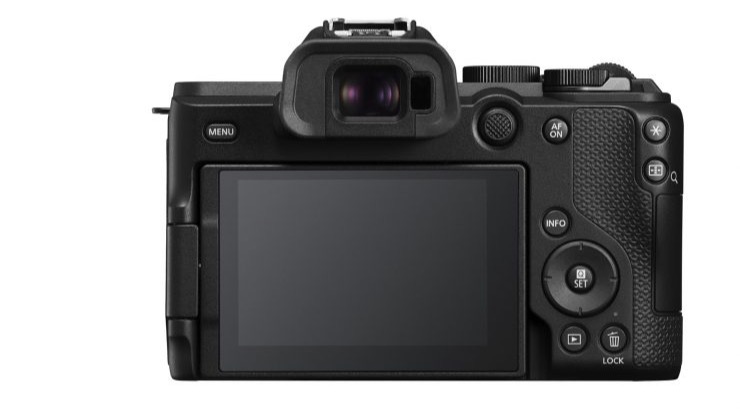
Photo: Canon, via Newsshooter.
10-Bit 4:2:2 Stops Being a Flagship-Only Feature
The bigger deal for colorists is buried in the codec list. Leitner’s breakdown shows the R8 Mark II recording XF-HEVC S in 4:2:2 10-bit at both 4K60 (roughly 225 Mbps) and 4K30 (roughly 135 Mbps), plus an XF-AVC S 4:2:2 10-bit 4K60 mode at around 250 Mbps for anyone with a V60 card. Full HD at 179.8p, oversampled from the full sensor width with no crop, also records 4:2:2 10-bit at 150 Mbps. None of this requires stepping up to Canon’s cinema line. Canon Log 3 ships standard, at a minimum ISO of 800, alongside Canon 709, PQ, and HLG presets for anyone delivering straight to Rec.2100 without a full grade.
That’s real grading latitude in a camera Canon is pricing at $1,899 body-only, with a kit version at $2,099, shipping in late October. A few years ago, 10-bit 4:2:2 at every frame rate, not just a token top-tier mode, was the thing that justified paying triple for a cinema body. Now it’s standard on the camera Canon considers its entry point into full frame.
Who This Actually Serves
None of this is a spec sheet for spec sheet’s sake. A hybrid shooter who edits their own footage gets a body that hands off cleaner handheld plates and a codec with enough headroom to survive a real grade, without needing a gimbal rig or a second camera purchase to get there. Canon didn’t make the R8 Mark II more camera. It made it a camera that causes fewer problems for whoever sits down to cut it.
Sources:
- Newsshooter — Erik Naso, “Canon Announces EOS R8 Mark II: Adds In-Body Stabilization, Keeps 24.2MP Sensor”
- CineD — Nino Leitner, “Canon EOS R8 Mark II Announced – 24.2MP Full-Frame, IBIS, and Oversampled 4K60p”
- Canon U.S.A. — “Lightweight Power, Unlimited Creativity: Canon Introduces the EOS R8 Mark II Full-Frame Camera and New Accessories”
- GlobeNewswire — Canon U.S.A. Official Press Release