The ARRI Alexa 35 was the default camera at the 2026 Venice Film Festival, showing up in 14 of the 39 films in official selection, according to a camera-by-camera survey of the lineup by Y.M.Cinema Magazine. That’s the least interesting fact in the whole piece. What’s actually worth an editor’s attention is who skipped it on purpose, and why.
A handful of films at Venice this year went back to actual film stock. The Colors of the Sun shot on an ARRI 435 on 35mm. Dau used an ARRICAM LT, an ARRI BL 4.2, and an Aaton 35 III, all on 35mm. Look Back paired an ARRICAM LT with an ARRI 435, also 35mm. The Girl with the Leica shot Super 16 on an Arriflex 416 and a Beaulieu 4008 ZMII. Per Y.M.Cinema’s reporting, the cinematographers behind these choices weren’t chasing a look they could replicate later in a grade. They wanted the grain, the texture, the discipline of finite film magazines, and what the piece calls “the different emotional behavior of photochemical capture” baked into the negative itself.
Digital Cameras Chosen for What They Get Wrong
The more telling pattern is digital cinematographers deliberately picking older, dirtier tools over newer, cleaner ones. Sean Price Williams shot Paul Schrader’s The Basics of Philosophy on a Sony Venice 2, but ran it through vintage Zeiss Super Speeds instead of anything modern, out of what’s described as his own affection for the lens character of films from the late 1970s and early 1980s. That’s a working cinematographer treating a 50-year-old optical flaw as a feature.
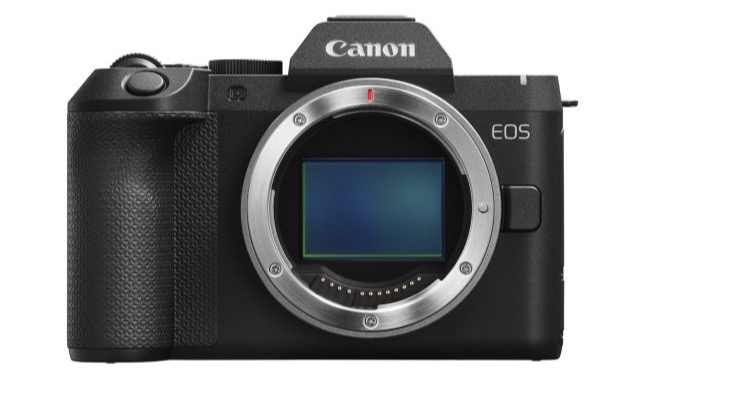
Kristóf Becsey went further on Ground Floor, Gábor Reisz’s absurdist Hungarian apartment-block satire that premiered at Venice. Becsey shot it on a Canon C300 Mark II, a camera that’s a full decade removed from cutting-edge, and did it partly, per Y.M.Cinema, “because of its noise” — rejecting cleaner, newer options on purpose. Screen Daily’s review of the film separately credits Becsey with making the building’s cramped space feel “unsettlingly elastic,” throwing in whip pans between characters to ratchet up the tension. The camera’s rougher image isn’t hiding the low budget. It’s doing character work.
Robert Kolodny shot Robert Greene’s Too Much Sugar on a Sony FS7 he’s owned for 13 years, a camera most professional shooters would now call outdated. Kolodny’s own explanation, reported by Y.M.Cinema, wasn’t nostalgia: he knows the camera intimately, it cost nothing to rent, and he could treat it as a practical working tool rather than something precious. Familiarity and physical instinct, not specifications, is the actual quote. That’s a cinematographer optimizing for how a camera behaves in his hands over how it performs on a spec sheet.
The Colonoscopy Camera in Primetime
Then there’s Lance Oppenheim’s Primetime, starring Robert Pattinson, which took the “wrong tool on purpose” approach further than anything else at the festival. Alongside an Alexa 35 for its main coverage, the production hid eight Panasonic DVX100Bs around the set to catch simultaneous points of view, brought in a Sony DXC-M2 tube camera and an Ikegami ITC-730AP for their specific degraded textures, and — for a shot depicting travel through a computer screen — used an actual endoscope colonoscopy camera. Not a digital effect built to look like one. The real medical instrument, pointed at a monitor.
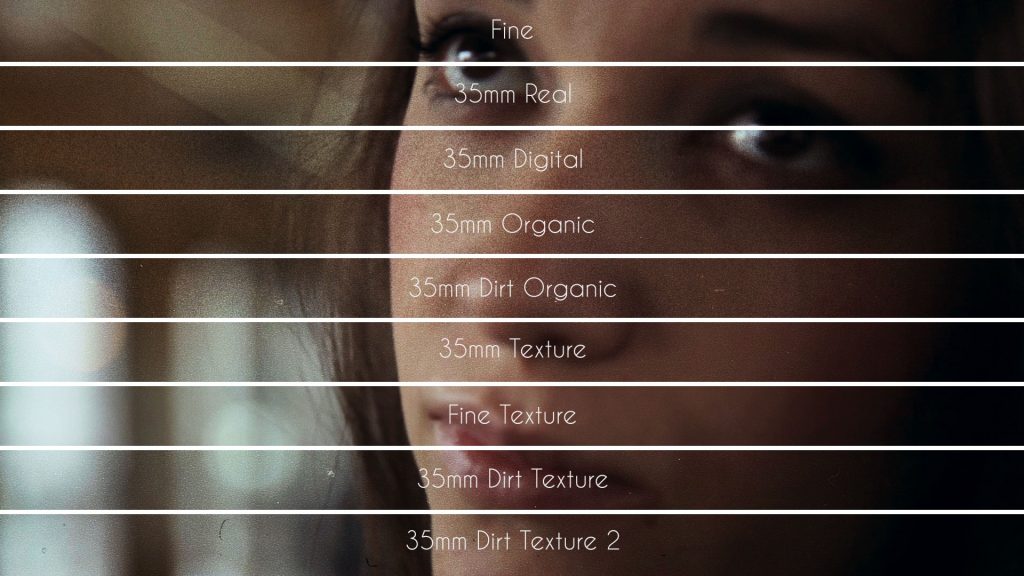
None of these are retro affectations for their own sake. Each is a specific answer to a specific problem: how do you make an image feel handmade, unstable, or physically present instead of just correct. It’s the same instinct that makes a colorist reach for a grain plate instead of leaving a 4K digital capture pristine — Grainzilla’s whole product line, from 4K Real 35mm Film Grain to 4K Organic Grain, exists because most productions can’t put an actual Aaton or a 13-year-old FS7 on set, but still want the image to carry that same sense of wear.
Clean has never been the hard part of digital cinema. Making an audience feel something in an image that could otherwise look like a spreadsheet is. At Venice this year, a striking number of the festival’s cinematographers solved that problem by reaching backward.
Sources:
- Y.M.Cinema Magazine — “Venice 2026 Cameras: ARRI Dominates, but DPs Still Choose Film and Unusual Tools”
- Screen Daily — “Ground Floor review: Absurdist Hungarian comedy effectively turns a run-down apartment block into state of the nation satire”
- La Biennale di Venezia — Official 2026 Competition entry, “Primetime”
- The Hollywood Reporter — “Venice 2026 Film ‘Ground Floor’ Is a Political Parable on Apathy”
- Wikipedia — Robert Kolodny (filmmaker)