Letterboxd’s September Report 2026, the site’s monthly ranking of the year’s highest-rated wide releases, put “Project Hail Mary” at number two for the year so far. That ranking is really a verdict on pacing, on a movie that could have easily collapsed under its own structure: two timelines, a talking alien, and a lead actor spending most of his screen time solving problems alone in a room. It didn’t collapse, and the reason is mostly Joel Negron, ACE, who told Steve Hullfish’s Art of the Cut that his first assembly ran six hours long.
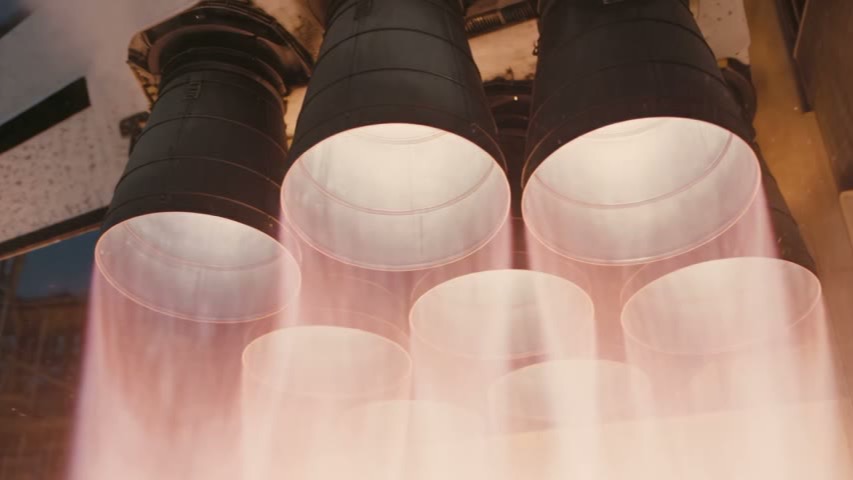
Photo: NASA/JPL-Caltech.
Six Hours Down to a Wall of Index Cards
Negron’s process wasn’t a magic algorithm, it was a physical one. He and the editorial team printed an index card for every scene and pinned them to a wall by reel, stepping back to actually look at the shape of the story rather than trusting a timeline scrubber to reveal it. That’s how they caught the film’s biggest structural problem before test audiences ever could: “we were on Earth too long.” The fix wasn’t cutting Earth scenes so much as interjecting space sequences to break up the terrestrial stretches, changing the rhythm of when information arrived rather than how much of it there was.
The film went from that six-hour assembly to roughly three hours and forty-five minutes for test screenings, then dropped substantially further for the theatrical cut. Negron was matter-of-fact about where the length actually came from: “Most of them got shortened. Maybe two or three scenes got cut out of the movie.” The real work wasn’t excising bad material, since by his own account there wasn’t much of that to excise. “So much of it is cutting out the good stuff,” he said, describing an editing philosophy built less around judgment of quality and more around instinct for momentum: “editing is mainly just feeling what comes next.”
The Flashback Problem Nobody Warns You About
The movie’s memory structure, told through the lead character slowly recovering who he is, created a specific audience-comprehension problem in test screenings: viewers initially couldn’t tell they were watching memories rather than conventional flashbacks. Negron’s team had to “work hard to make you understand that he was trying to remember,” restructuring where those memory sequences landed relative to the script’s original order based directly on what test audiences actually understood versus what the page assumed they would. Negron’s own dailies method, built on quick rough assemblies followed by detailed string-outs in shooting order, traces back to advice from editor Joe Hutshing that he still follows: “If you see something and you don’t pull it out, you’re probably never going to find it again.”
Cinematographer Greig Fraser Went Warm on Purpose
The memory sequences got their own visual treatment, too. Fraser physically ran footage through a film-out process, printing digital images to actual film stock and scanning them back, a technique he’d previously used on “Dune,” specifically to add grain and color flashes to the flashback material. It’s a genuinely old-school solution to a very modern problem: rather than faking a memory’s texture digitally, he put the image through an actual photochemical process and let the real artifacts of film do the work.
Fraser called “Project Hail Mary” the most challenging shoot of his career “by far,” and the hardest single sequence was lighting a translucent alien tunnel for a first-contact scene where the alien Rocky, a puppet with no face, had to emote through lighting alone. His crew rigged pixel-mapped tungsten lights to simulate a rotating sun inside the set. Just as deliberately, he steered the film’s overall palette away from the cold, desaturated blues that have become sci-fi shorthand since “Gravity” and “Interstellar,” pulling warmer references instead from “Solaris,” “Alien,” and “2001: A Space Odyssey.”
None of that shows up on a spec sheet, and none of it is the kind of thing a marketing featurette explains well. It’s the kind of decision-making that only surfaces when an editor or a cinematographer sits down and actually walks through why a scene works, which is exactly why “Project Hail Mary” sitting at number two on Letterboxd’s list matters more than the number itself. Audiences rated the feeling. The interviews explain where the feeling actually came from.
Sources:
- Letterboxd — “September Report 2026: Top 25 Films of the Year So Far”
- BorisFX — Steve Hullfish, “Art of the Cut: Project Hail Mary”
- Variety — “‘Project Hail Mary’ Cinematographer Greig Fraser on How He Filmed the Tunnel Scene”
- PetaPixel — “‘Project Hail Mary’ Cinematographer Says Film Was ‘Challenging'”
- Definition Magazine — “Greig Fraser Breaks Down the Cinematography Behind Project Hail Mary”