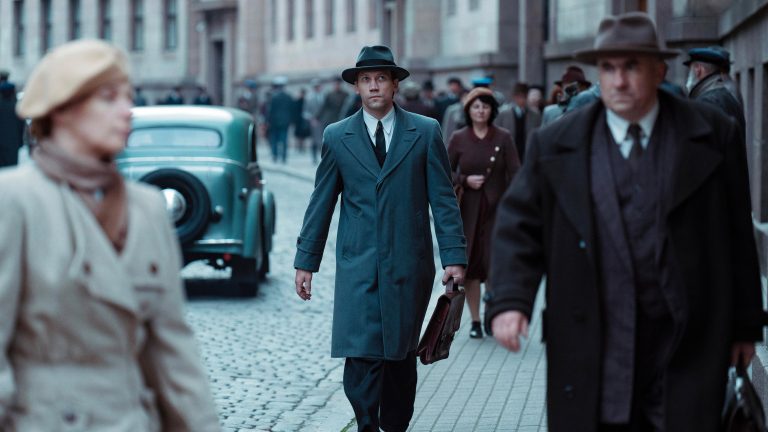
Criterion put out “Two Prosecutors” on disc this month, and the choice that makes Sergei Loznitsa’s Stalin-era drama worth studying isn’t in the script. It’s the frame. Cinematographer Oleg Mutu shot the entire film in the boxy 1.33:1 Academy ratio, the shape movies mostly abandoned seventy years ago, and he did it on purpose, to make a bureaucratic nightmare feel physically airless.
Set in 1937 during the Great Purge, the film follows a young Soviet prosecutor who investigates a letter written in blood by a man tortured by the secret police, only to watch the system close around him the deeper he digs. It won the François Chalais Prize at Cannes in 2025, and the choice to shrink the frame down to nearly a square is exactly the kind of decision that separates a director using restraint on purpose from one who simply didn’t have the budget for anything fancier.
A Frame Shaped Like the System It’s Depicting
Academy ratio was chosen specifically to emphasize what one review of the disc called “the layers of suppression within this hermetically sealed environment.” That’s not incidental set dressing, it’s the whole visual argument of the film. A wider frame gives a character room to move, room to escape a conversation, room for the eye to wander somewhere the story isn’t forcing it. Boxing the image down to 1.33:1 removes that room. Every office, every hallway, every desk the prosecutor sits across from someone more powerful than him feels like it’s pressing in, because the frame itself has nowhere left to give.
Mutu paired that shape with a deliberately drab, low-contrast palette of muted greys, and critic Leonardo Goi, reviewing the film for The Film Stage, described the visual approach as building toward “an ominous static” rather than any kind of kinetic energy, mostly through static shot-reverse-shot exchanges as the prosecutor gets passed between bureaucrats. Goi’s read gets at exactly why the film works: it looks like it’s doing nothing, right up until you realize the stillness is the tension.
Eighteen Days, One Director, One Cinematographer, Every Time
Loznitsa has worked exclusively with Mutu on every one of his features since the two met in Chisinau in 2009, and he’s said their creative alignment runs deeper than a typical director-DP working relationship: “Oleg is not just a cinematographer; he is also a philosopher.” That kind of shorthand is what let them shoot “Two Prosecutors” in just eighteen days, a genuinely fast schedule for a film built almost entirely around composed, static setups where there’s no room to hide a rushed choice. A film this visually disciplined usually implies a slower, more deliberate shoot. Instead it implies a director and a cinematographer who no longer need to discuss what a shot should look like before they light it.
Loznitsa has also talked about his approach to filmmaking in more structural terms, describing his interest as being “not simply an individual story but the system surrounding that person.” That’s the same instinct driving the aspect ratio choice. The prosecutor’s personal crisis of conscience is really a story about how a system built entirely on fear processes anyone who tries to act with integrity inside it, and a frame with no breathing room is a more honest way to shoot that than any amount of dialogue explaining it.
Why This Belongs on an Editor’s Watchlist
Most working editors will never be handed a film where the aspect ratio itself is the emotional argument, but “Two Prosecutors” is a clean demonstration of a principle that applies at any budget: restraint is a choice, not an absence of one. A static frame, held a beat longer than feels comfortable, or a boxier ratio than the platform defaults to, can do narrative work that no amount of coverage or camera movement will replace. It’s the same logic behind why a well-placed lack of a cut can hit harder than a flashy one. Loznitsa and Mutu just built an entire feature around trusting that.
“Two Prosecutors” isn’t a film that announces its craft. It sits there, boxed in, daring you to notice why that’s exactly the point.
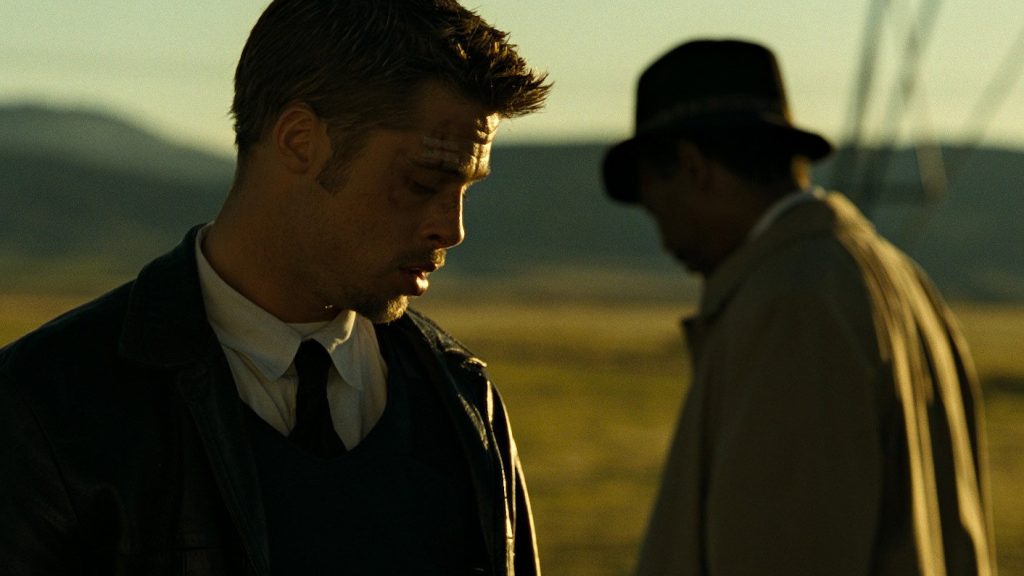
Image: Two Prosecutors (2025), © Barbaro Film, Arizona Productions, Studio Uljana Kim. Used for the purposes of criticism, review, and commentary under the fair dealing provisions of Section 29.1 of the Canadian Copyright Act (R.S.C., 1985, c. C-42). The image illustrates the editorial analysis above and is not used as a substitute for the original work or for independent commercial exploitation. All copyright in the image and the underlying film remains with its respective rights holders.
Sources:
The Film Stage — Leonardo Goi, “Two Prosecutors Review”
Geek Vibes Nation — “Two Prosecutors Criterion Collection Blu-Ray Review”