Horror is the one genre where a clean, sharp digital image actively works against you. A slasher shot on a pristine 4K sensor with no texture reads like a corporate training video with a knife in it. The degradation itself, VHS noise, torn-up 16mm grain, projector flicker, is doing narrative work: it’s telling the audience this footage is old, unreliable, or recovered from somewhere it shouldn’t have survived. Picking the wrong texture for the wrong horror subgenre is one of the fastest ways to undercut a scene that’s otherwise working.
Found Footage Wants Format Accuracy, Not Just Grime
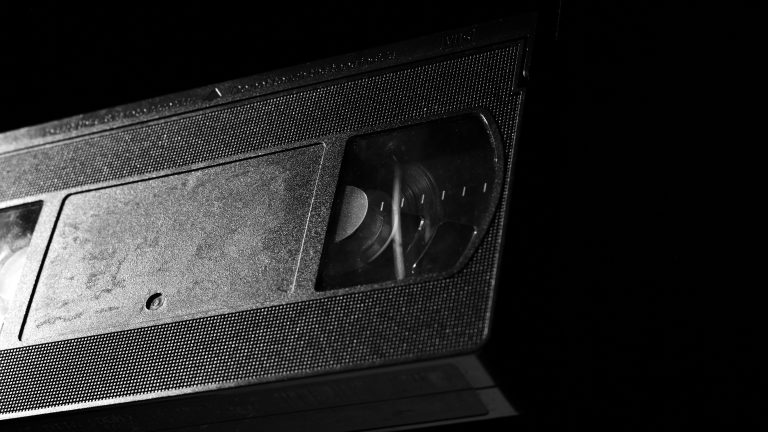
The found-footage subgenre lives or dies on period-accurate degradation, not generic grunge. DP Powell Robinson, shooting the “Coochie Coochie Coo” segment of “V/H/S Halloween,” told Film Obsessive’s Chris Miller that his segment specifically targeted early-2000s DV cam artifacts rather than VHS tape damage, because the story is set in 2009: “It needed to be accurate for the time period, meaning DV cam, not VHS since our segment is set in 2009, and we wanted to avoid glitches as often as possible.” That’s the discipline good found-footage horror requires, matching the exact decay of the format your fictional camera would have actually used, not just piling on the nearest noise texture. For that job, Grainzilla’s free VHS Bad Noise overlay is built specifically for degraded tracking errors and static rather than the softer glow of a clean VHS tape, which is the right starting point if your found-footage conceit is a damaged or partially corrupted recording rather than a merely old one.
Slasher and Grindhouse Wants Coarse, Dirty Grain
Grindhouse and retro slasher horror is a different problem entirely, you’re not simulating a damaged recording device, you’re simulating a damaged film print. Rafael Abreu, writing for StudioBinder, frames grain as a period signal as much as a texture: “If your film is set back in the 20th century, grain texture can help give off that feeling more than a straight digital look would.” For that look, reach for Grainzilla’s 4K 35mm Dirt Film Grain Texture 2 ($9.90), which layers coarse, uneven grain with print damage baked in, closer to a scratched-up theatrical release print than a clean scan. If the look needs to go further into full print decay, the 4K 35mm Dirt Organic Grain ($9.90) adds organic irregularity on top of the dirt, which reads as more film-native than a uniform digital scratch overlay.
When You Need The Full Damaged-Print Package
Grain alone doesn’t sell a grindhouse look on its own, it’s grain plus the physical damage a real print accumulates from decades in a projection booth. Grainzilla’s Vintage Film FX Pack 2.0 ($24.90) bundles film burns, two flicker overlays for exposure instability, scratch and grunge damage overlays, and two VHS noise variants into one pack, built specifically to go “beyond grain into the full set of imperfections that read as old film.” For a horror short or feature leaning hard into that damaged-reel aesthetic, layering a burn or flicker element under a jump scare adds instability the audience feels before they consciously register why the shot feels wrong.
The Buying Path For A Horror Project
If you only need one texture for one found-footage short, the free VHS Bad Noise overlay covers it at no cost. If you’re building a grindhouse slasher and need grain plus damage, buy the Vintage Film FX Pack 2.0 rather than assembling individual $9.90 files piece by piece, it already bundles flicker, burns, scratches, and VHS noise alongside dirt grain. Editors cutting horror alongside other genres in the same year are better served by the Grainzilla Ultimate Bundle Pack ($59.90), which rolls the Vintage Film FX Pack, both 4K and 1080p Film Grain Packs, and the rest of the catalog into one license, so a slasher project and a clean commercial gig draw from the same purchase instead of two separate ones.
Match The Decay To The Story You’re Telling
Every horror subgenre lies about its own footage in a specific way, found footage lies about being a recovered recording, grindhouse lies about being a battered theatrical print, and each lie has its own signature damage pattern. Robinson’s DV-not-VHS distinction and Abreu’s point about grain as a period marker both land on the same idea: audiences register format decay even when they can’t name it, and a mismatched texture breaks the illusion faster than no texture at all would.
Sources: