SIRUI’s new Saturn V2 anamorphic lenses do something no anamorphic set has done before: the barrel physically rotates 90 degrees, mid-shoot, without coming off the camera. Unlock a switch, twist, lock it back down, and a lens built for widescreen just became a lens built for vertical. It won Best of Show at IBC 2026, and after watching the hands-on demos, it’s easy to see why it’s the anamorphic story worth paying attention to this year, not the specs.
Anamorphic glass has always had a delivery problem. The oval bokeh, the horizontal flares, the 1.6x squeeze that gives a wider field of view than the sensor should allow, none of it survives a crop to 9:16. Point a horizontal anamorphic lens at a vertical frame and you either lose the compression that makes it anamorphic in the first place, or you throw away most of the frame trying to force it. Every editor cutting a campaign for both a cinema spot and an Instagram Reel has run into this. SIRUI just built a lens that refuses to pick a side.
A Three-Step Twist, Not a Lens Swap
Erik Naso, the Emmy-winning DP who put the Saturn V2 through its paces for Newsshooter at IBC 2026, described the mechanism straight from a SIRUI rep on the show floor: “unlock, twist 90 degrees, lock, and the barrel is in vertical orientation with the flare axis rotated along with it.” That last detail is the part that actually matters. A lot of “vertical-capable” anamorphic workarounds just rotate the camera and call it a day, which also rotates the flare streaks sideways and makes them look wrong. SIRUI rebuilt the optical housing so the flare axis moves with the barrel, meaning a vertical shot still flares the way an anamorphic shot is supposed to.
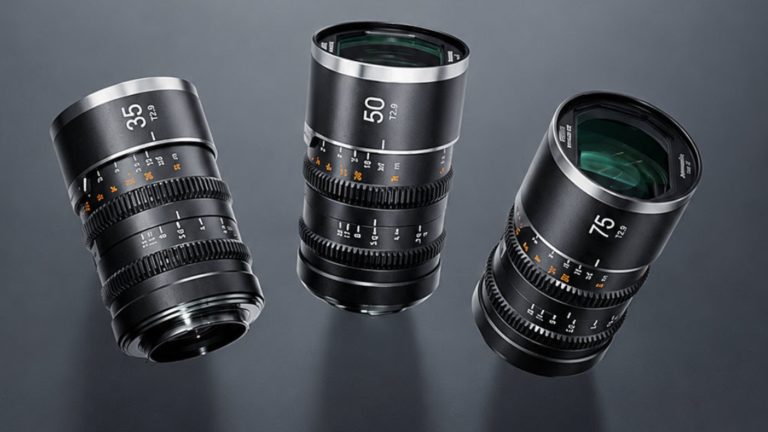
The set ships in three focal lengths, 35mm, 50mm, and 75mm, all at T2.9 with a 1.6x squeeze, a shared 62mm filter thread, and Sony E, Leica L, and Canon RF mounts. SIRUI also reworked the glass itself for this second-generation Saturn: the original’s signature blue-streak flare has been swapped for a neutral flare that picks up the color of whatever light is actually hitting it, the focus damping was tuned to stay smooth instead of loosening with use, and the iris ring was deliberately stiffened so it doesn’t drift during handheld work. None of that is flashy on a spec sheet, but it’s exactly the kind of detail that separates a lens someone actually rents twice from one that gets a single viral demo video and disappears.
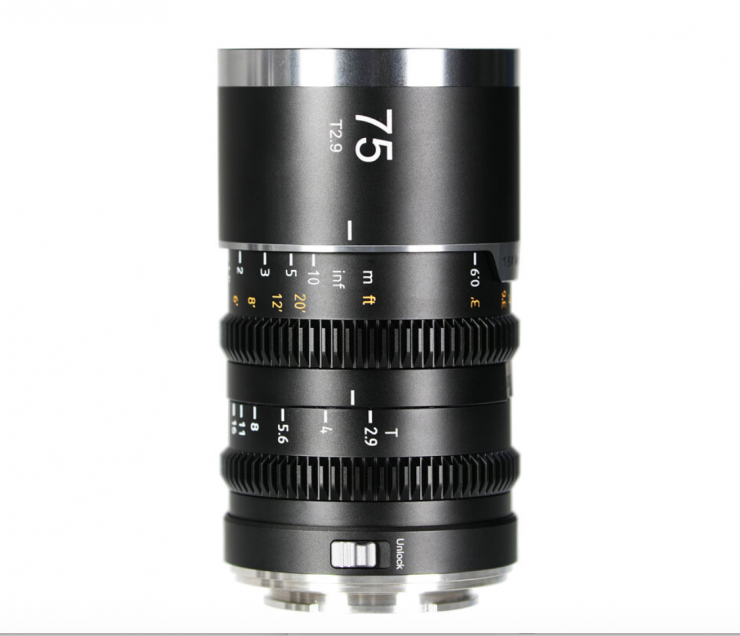
Photo: SIRUI, via Newsshooter.
Why an Editor Should Care About a Lens Announcement
It’s tempting to file this under gear news and move on, but the actual shift is a post-production one. Right now, shooting anamorphic for both a horizontal master and a vertical cutdown means either a second camera, a separate handheld pass, or accepting that the vertical version won’t really be anamorphic at all, just a pan-and-scanned crop that loses the squeeze. Digital Camera World’s coverage put it plainly: most anamorphic lenses “aren’t made for the social media era that demands vertical videos.” The Saturn V2 collapses that into one lens and one setup, which means less mismatched footage landing on an editor’s timeline and fewer color and geometry inconsistencies to paper over between a 16:9 master and a 9:16 cutdown of the same scene.
It’s also genuinely light for what it is. At 437 to 494 grams depending on mount and focal length, and only 4 to 4.5 inches long, the set is built for gimbals and sliders as much as tripods, which matters if the same shoot is expected to produce both a cinematic hero cut and quick vertical coverage without rebuilding the rig between setups.
Price and Availability
The full three-lens set runs $1,699, with individual lenses at roughly $600 each, and SIRUI says they’ll ship two to three weeks out from IBC, putting real units in hands around early October. That’s aggressive pricing for a mechanism nobody else has shipped. Anamorphic glass with a real cinema pedigree usually starts well north of this, and SIRUI is betting that solving the vertical-delivery problem outright is worth more to working shooters than another marginal improvement to flare character alone.
Whether the Saturn V2 becomes a workhorse or a novelty depends on how it holds up outside a trade show demo table, but the problem it’s solving is real, not manufactured for a press release. Every format war eventually gets settled by whoever makes it cheapest to stop choosing sides. This is SIRUI’s opening bid.
Sources:
Newsshooter — Erik Naso, “SIRUI Saturn V2: Hands-On at IBC 2026”
Newsshooter — “SIRUI Saturn V2 35mm, 50mm & 75mm T2.9 1.6x Full-Frame Anamorphic Lenses”
Digital Camera World — “Meet the Sirui Saturn V2 Lens Trio”
RedShark News — “SIRUI Saturn V2: Specs, Mounts and Pricing”