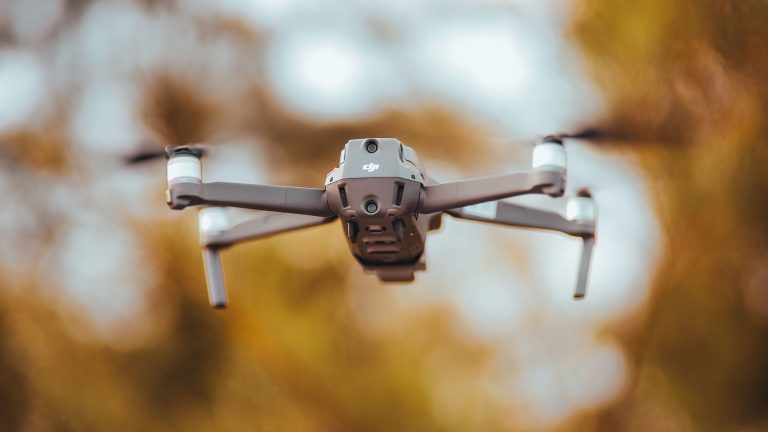
Someone shot Michael Gardner’s DJI Mavic 4 Pro out of the sky over Athens, Alabama, while he was flying it for a paid real estate job, and the $5,000 aircraft is now Exhibit A in a case that could carry a 20-year federal prison sentence. Gardner, who runs Deep South Aerial Photography, was working a listing off Lindsay Lane when a gunshot sent his video feed into static and the drone into the ground. He got it back two days later, after someone else found it in a field.
What Actually Happened
Gardner described the moment plainly to PetaPixel: “I look in my controller and my video feed is going crazy and it is crashing to the ground.” Nobody has been identified as the shooter, and Gardner told PetaPixel he’s filing a police report and contacting the FAA’s Birmingham office. It’s not his first brush with this kind of hostility either. “I’ve heard of people’s drones getting shot down. I have been threatened to have mine shot,” he said, describing property owners who assumed flying a drone near or over their land gave them the right to bring it down.
The Airspace Myth That Keeps Getting Drones Shot
Gardner’s response to that assumption is the most useful line in the whole story: “one thing that they don’t realize is they don’t own the airspace above the tallest blade of grass in their yard.” That’s not a throwaway retort, it’s the actual legal baseline. Airspace above private property is federally regulated the moment an aircraft, including a camera drone, is in it. Homeowners who treat a drone overhead like a trespasser on the lawn are working from a version of property law that stopped applying once the Federal Aviation Act existed. Gardner also flagged the practical danger nobody threatening to shoot a drone seems to consider: “a bullet through a lithium battery can ignite it,” turning a petty grievance into a genuine fire hazard on someone’s own property.
Why This Is a Felony, Not a Nuisance Complaint
Under Title 18, Section 32 of federal law, intentionally damaging or destroying an aircraft is a felony, and the FAA classifies camera drones as aircraft under that statute, the same one that covers shooting at an airliner. DroneXL’s coverage puts the ceiling at up to 20 years in prison, and this isn’t a hypothetical penalty nobody actually faces. A Florida man was sentenced to four years for shooting down a sheriff’s department drone, and another was ordered to pay $5,000 in restitution for destroying a Walmart delivery drone. Courts have treated this as exactly the kind of case the statute was written for, not as a technicality prosecutors decline to pursue.
The Actual Risk for Anyone Flying for Work
If you’re shooting real estate, weddings, or B-roll with a drone for a living, Gardner’s story is the risk you’re carrying that never shows up in a gear review. It’s not a sensor limitation or a firmware bug, it’s a stranger with a grudge and a rifle who’s wrong about the law but still capable of taking down a $5,000 aircraft in one shot. Pilot Institute’s advice, relayed by DroneXL, is worth keeping in your back pocket if it ever happens to you: land safely if you can, document everything, and call both the police and the FAA. The legal system is unambiguously on the pilot’s side here. That’s cold comfort when your gimbal is in a ditch, but it’s the difference between an expensive accident and a federal case.
Every aerial shot in your reel came from a pilot who took off assuming the sky above someone else’s yard was exactly as legal to fly in as the sky above their own. Gardner’s Mavic proved that assumption still gets tested at gunpoint, and the law, for once, has already settled who’s right.
Sources: