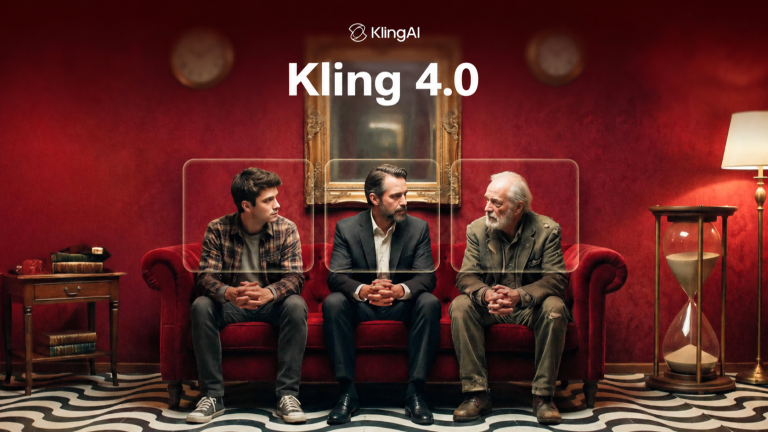
Kling 4.0 exists as an announcement right now, not as a product anyone can actually use. Kuaishou released the model’s spec sheet on September 30 — native generation up to 30 seconds, up to 4K resolution with 10-bit HDR, up to 10 keyframes, up to 15 multimodal references in a single request, and stereo audio with improved lip sync across multiple languages. What’s actually available as of this week is Kling 4.0 Flash, a lighter version with a 20-second cap, 720p output, 8-bit SDR color, no API endpoint, and access limited to Ultra annual subscribers only. The full model launches “sometime in October” with no specific date confirmed. That gap between announcement and availability is worth understanding before building any new workflow around it.
What Kuaishou Actually Announced
The headline feature of the full Kling 4.0 is native 30-second generation in a single pass. That’s genuinely meaningful for editors. Right now, generating 10 or 15 seconds of AI footage and cutting it into a sequence is awkward — the shot is over before any real camera movement or action can develop. A 30-second native clip changes what’s actually usable: you could generate a full walking sequence, a full establishing shot with a developing camera move, a full performance clip without the frame running out on you. Whether Kling 4.0 actually delivers that with the motion stability and character consistency it’s promising is a separate question, but the target spec makes sense as a workflow requirement.
The 10-keyframe system is the other feature worth watching. Kling 3.0 let you set a start and end frame; 4.0 extends that to 10 control points across the clip. That’s the difference between interpolating between two states and actually directing a camera move or an action sequence through multiple beats. Combined with up to 15 multimodal references — Kuaishou describes it as “up to 15 references across text, images, video and audio” — the model is moving toward something closer to pre-visualization than B-roll generation. Whether the output matches that ambition is unconfirmed; all specs are self-reported by Kuaishou and none have been independently validated yet.
What’s Actually Shipping Right Now
Kling 4.0 Flash has been in limited early access since September 28, for Ultra annual subscribers only. It generates up to 20 seconds at 720p in 8-bit SDR — essentially similar specs to the better end of what Kling 3.0 does at its shorter durations. There’s no API, no published credit pricing for 4.0 generations, no independent benchmark results, and no confirmed date for when the full model goes live. Kling 3.0 remains the only version with general API access.
The sloptv.co write-up tracking this put it plainly: the headline specs drove the announcement, and the product shipping today falls well short of them. That’s not unusual in this space — nearly every major AI video model announcement in the past year has worked this way, with a spec sheet that reads better than the early-access version — but it’s worth flagging before assuming the 30-second 4K workflow you’re planning is currently available.
The Competitive Landscape Around the Launch
Kling 4.0 is launching into a moment where the AI video leaderboard has shifted significantly since Kling 3.0 debuted in February. Alibaba’s Wan 3.0 currently sits at the top of the video generation rankings, and ByteDance’s Seedance 2.5 is right alongside it. OpenAI has shut down the Sora API, effectively stepping back from the filmmaker-focused market it briefly entered. The Google Veo and Luma Ray models are now both inside Adobe Premiere via the Generative Media Tool, which means editors have access to multiple AI video models without leaving their NLE at all.
In that context, Kling 4.0’s 30-second native generation is a real differentiator if it works as advertised — no other model currently ships clips that long in a single generation pass. The 10 keyframe and 15 reference system also goes further than anything currently in Premiere’s model lineup. But “if it works as advertised” is doing a lot of work in that sentence. Kling’s official description of the model — “natural motion, purposeful camera work, consistent characters, and well-integrated sound all shape the final result” — reads more like a marketing brief than a technical spec. The more useful statement in the announcement may be their note that “a longer video is not just about adding more seconds,” which at least acknowledges that maintaining shot-to-shot consistency across 30 seconds is a genuinely hard problem.
What to Actually Watch For When It Ships
For editors thinking about how to use Kling 4.0 in a real workflow once the full model arrives, the questions worth testing are: Does 30-second generation actually hold character identity and camera physics through the full clip, or does it drift the same way shorter clips do at their edges? Does the 10-keyframe system give you real directorial control over the camera move, or does the model still interpolate unpredictably between your control points? And how does the AI-generated footage look next to real camera footage when you cut them together — because a 30-second AI shot will be much harder to hide in a sequence than a 5-second B-roll insert. The grain and color mismatch between what a camera captures and what a generative model synthesizes gets more visible the longer the generated clip runs.
Kling 3.0 is still the option with actual API access and independently tested results. That’s where the real workflow sits until the full 4.0 model shows up with third-party benchmarks. Watch for those before committing any production timeline to specs that haven’t been tested outside Kuaishou’s own demo reels.
Sources:
Inside Kling 4.0: A Complete Guide to AI Video Creation — Kling AI (official blog)
Kling 4.0: October Promise, Flash-Only in Practice — SloptV
Kling 4.0 Release Date, Specs and How to Get Access — ImaginetoVideo
Kling 4.0: Release Date, Features, 30s Video, 4K HDR & Keyframes — AI Idea List
Kling 4.0 vs 3.0: What’s Different in the New Model? — Kling AI (official blog)