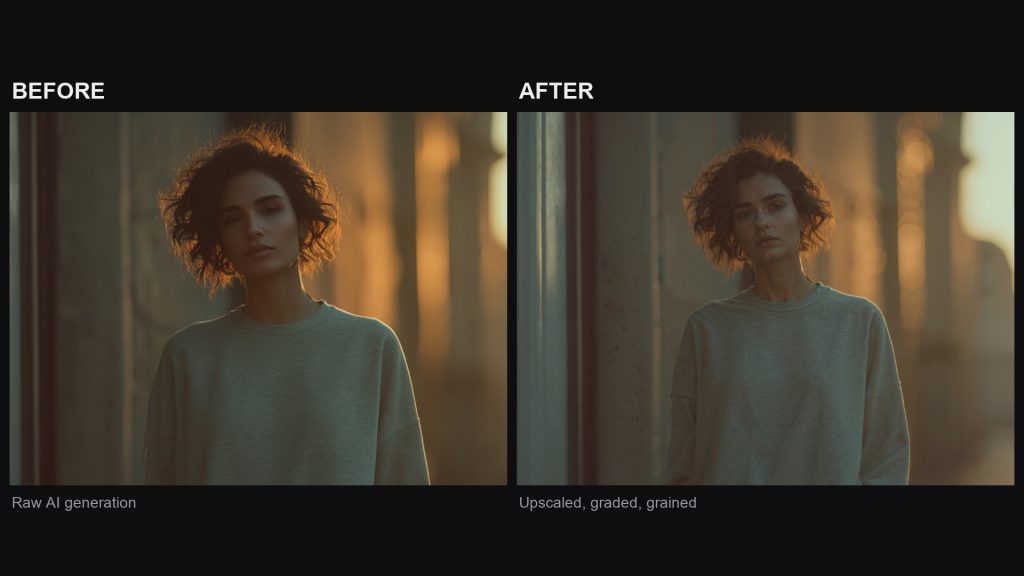
Alibaba’s Wan 3.0 is now the top-ranked model on Artificial Analysis’s Text to Video leaderboard, the closest thing the AI video field has to an independent scoreboard, edging out Google’s Gemini Omni Flash and beating OpenAI’s Sora 2 and Google’s Veo 3.1 outright. It’s also sitting at No. 1 on the same site’s Video Editing leaderboard. For a field that’s mostly made headlines over viral deepfakes and copyright lawsuits, a hosted Alibaba Cloud model quietly out-scoring Sora and Veo on blind user votes is the more interesting story this week.
How the Ranking Actually Works
Artificial Analysis runs its Video Arena as blind side-by-side comparisons: viewers pick a preferred clip without knowing which model made it, and the results get converted into an Elo score the same way chess ratings work. On the Text to Video (With Audio) board, Wan 3.0 currently sits at 1242, just ahead of Gemini Omni Flash at 1238 and Minimax H3 Max at 1231. Further down the list, Kling 3.0 1080p Pro sits at 1108, Sora 2 (December) at 1098, and Veo 3.1 at 1089 — a real gap, not a statistical toss-up. On the Video Editing board, where a model has to modify existing footage rather than generate from scratch, Wan 3.0’s predecessor ranked fifth, sixth, or twelfth depending on the category; Wan 3.0 jumped straight to first in two of the three.
What Makes Wan 3.0 Different
The model generates video up to 30 seconds long at up to 30 frames per second, in 480p, 720p, or 1080p, with audio generated alongside the picture by default rather than added as a separate pass. It also takes a wider range of inputs than most competitors: up to 10 reference images, five video clips of up to 15 seconds each, five audio files, or documents — PDFs, Word files, PowerPoint decks, spreadsheets, even public webpages — up to 100 MB or 50 pages. Feed it a script or a slide deck and it will attempt to turn that directly into a scored video. Pricing runs per output second: $0.05 at 480p, $0.10 at 720p, and $0.20 at 1080p, meaning a full 30-second clip costs $1.50 to $6 depending on resolution.
The Model Isn’t Perfect, and Alibaba Says So
Alibaba’s own release notes concede weaknesses in audio texture and on-screen text accuracy, and third-party testing from Atlas Cloud found the model introducing unwanted cuts during shots meant to run continuously — the kind of artifact that sinks a clip the moment an editor actually tries to cut it into a sequence. The model is also hosted-only for now: no open weights are available for local or on-premise use, unlike some of Alibaba’s earlier Wan releases, so anyone who wants it has to go through Alibaba Cloud’s Model Studio API or the consumer-facing Qwen app.
Why This Should Register With Editors, Not Just AI Watchers
A leaderboard swing is easy to shrug off as inside baseball, but the document-to-video input is the detail worth sitting with. It’s a real attempt to collapse the gap between a script and a first-pass visualization, which is a different pitch than “type a prompt, get a clip.” Whether that’s useful on an actual production depends entirely on how the output holds up past the demo reel — the rankings above only measure which clip people prefer in a blind vote, not whether the footage is usable, continuous, or clear of someone else’s copyrighted material. Every AI video model shipping this fast is still asking editors to take that gap on faith.
Topping a leaderboard is a marketing win. Whether Wan 3.0 earns a place in an actual timeline is a question no Elo score can answer.
Sources: