Walter Murch, the editor behind The Conversation, Apocalypse Now, and The English Patient, wrote down a hierarchy for every cut he has ever made and called it the Rule of Six. It first appeared in his book In the Blink of an Eye, and three decades later it still functions as the closest thing the editing profession has to a physics equation.
The Six Priorities, No Exceptions
Murch’s six criteria for a good cut, in order: Emotion, Story, Rhythm, Eye Trace, the two-dimensional plane of the screen, and three-dimensional continuity. He went further and assigned rough weights to each one, as reported by No Film School: Emotion 51 percent, Story 23 percent, Rhythm 10 percent, Eye Trace 7 percent, the 2D plane 5 percent, and spatial continuity 4 percent. That ranking puts the thing most editing tutorials treat as sacred, continuity, dead last. Murch’s own rule for what to sacrifice when a cut cannot satisfy everything: “If you have to give up something, don’t ever give up emotion before story. Don’t give up story before rhythm, don’t give up rhythm before eye-trace, don’t give up eye-trace before planarity, and don’t give up planarity before spatial continuity.” Translated for anyone cutting in Premiere Pro or Resolve tonight: a cut that breaks the 180-degree rule but lands the emotional beat still beats a technically clean one that feels dead.
The Conversation Taught Him To Break the Rules on Purpose
Murch put this philosophy to work early, cutting Francis Ford Coppola’s 1974 surveillance thriller The Conversation. In a 2022 interview with Evan Louison for Filmmaker Magazine, Murch explained that conventional matching action never suited a film about a paranoid eavesdropper: “The very wood I was working with, the wood of The Conversation, didn’t like cutting on matching action. Thematically what it seemed to like were these more kind of hard-edged cuts, where motion is about to happen but it hasn’t happened yet.” He wanted audiences trapped inside surveillance expert Harry Caul’s head with no exit: “The audience either willingly has to engage or become Stockholm Syndrome hostages to the film. There’s no wiggle room.” That is the Rule of Six in the wild — emotion and story overriding a continuity-first instinct that most editors are trained to default to.
236 Hours of Apocalypse Now
A few years later Murch faced the opposite problem: too much of everything. Coppola’s crew returned from the Philippines with roughly 1.25 million feet of workprint, about 236 hours, for a film that eventually ran under three hours. Murch told Peter Tonguette of CineMontage that the Apocalypse Now edit was “the longest post-production of any film that I have ever been involved in,” stretching almost two years because nobody, Coppola included, had agreed on how the movie should end. A straight first assembly, Murch said, “probably would’ve been six or seven hours long at least.” The film’s famous cold open, Martin Sheen drunk and shadowboxing in a Saigon hotel room intercut with helicopter and napalm footage that was originally shot as documentary coverage, was Murch’s invention, assembled as an overture from material nobody had written to go together. Emotion first, chronology a distant sixth.
From Avid to a $1,000 App
The Rule of Six survived every format change Murch lived through, and he lived through most of them. He cut The English Patient on an Avid system, and when he won the 1997 Oscar for Best Film Editing, it was the first time the Academy had given that award to a film edited digitally rather than on a flatbed or Moviola. He won Best Sound the same night, a double no one else has repeated. Seven years later he went further still: Cold Mountain became the first major studio feature cut entirely on Apple’s Final Cut Pro, a consumer app that at the time cost a fraction of a professional edit bay, a process documented start to finish in Charles Koppelman’s book Behind the Seen. The hardware kept shrinking and getting cheaper. The hierarchy underneath it, emotion, story, rhythm, eye trace, the 2D plane, spatial continuity, never moved.
Every editor cutting on Premiere or Resolve tonight has, for a fraction of what Murch paid for an Avid seat, more raw editing power than existed on the Apocalypse Now dub stage. What most of them are missing isn’t horsepower. It’s the nerve to leave a technically imperfect cut alone because it’s emotionally correct. That’s the whole rule, and Murch gave it away for free.
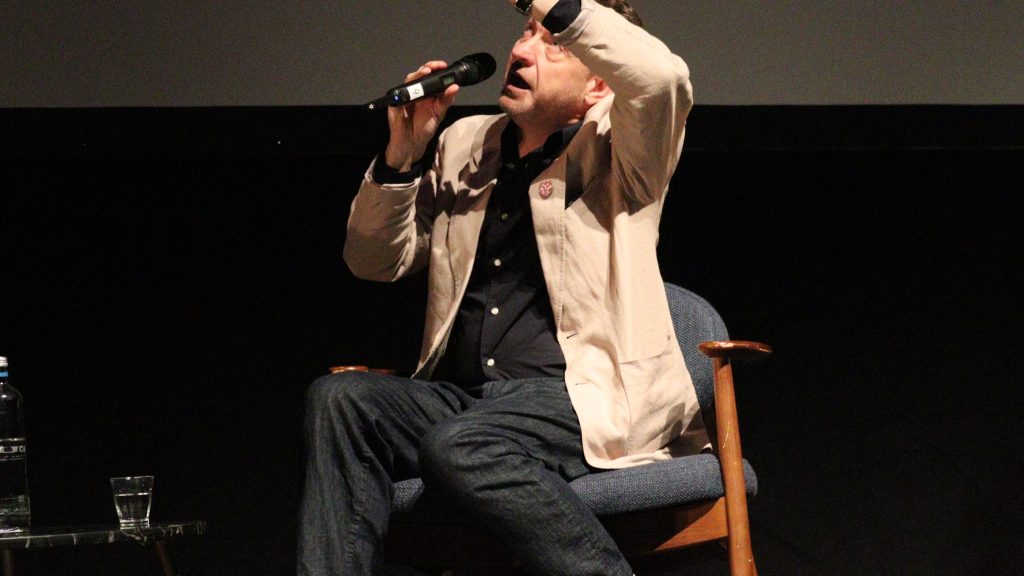
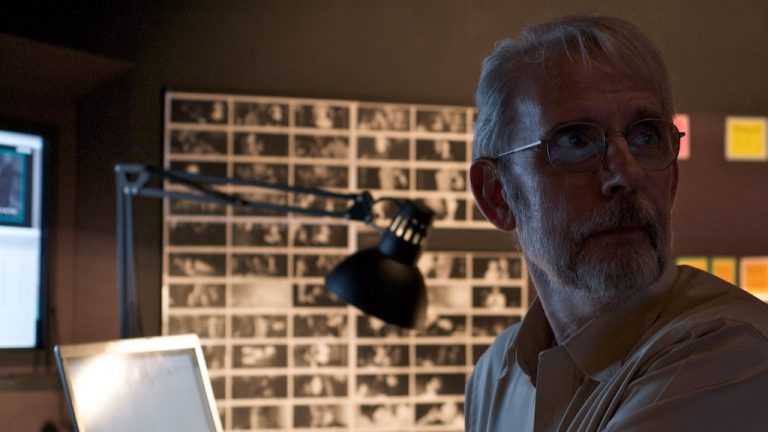
Photo: Walter Murch editing “Tetro” in Buenos Aires, 2008. Credit: Beatrice Murch, via Wikimedia Commons (CC BY 3.0).
Sources:
Walter Murch’s Six Rules for Good Cutting, No Film School (V Renée, 2016)
ART OF THE CUT with Walter Murch, ACE, ProVideo Coalition (Steve Hullfish, 2020)
Editor Walter Murch on Coppola’s The Conversation, Filmmaker Magazine (Evan Louison, 2022)
Walter Murch on ‘Apocalypse Now,’ CineMontage (Peter Tonguette, 2016)
Fun Facts and Dates in Digital Editing ‘Firsts,’ PremiumBeat
Behind the Seen: How Walter Murch Edited Cold Mountain Using Apple’s Final Cut Pro, Charles Koppelman (Peachpit)
WalterMurchWorking.jpg, Wikimedia Commons (Beatrice Murch, CC BY 3.0)