Ben Affleck spent four years quietly building an AI company in stealth mode, and it just made him roughly $587 million richer, according to Netflix’s own SEC filing. Not bad for a guy whose last headline-grabbing career move most people remember was a Dunkin’ commercial.
The company is called InterPositive, founded in 2022, and Netflix confirmed in a Form 10-Q filing that it completed the acquisition in March 2026 for a total purchase price of approximately $587 million in cash. A prior Bloomberg report had pegged the deal as high as $600 million once performance targets kicked in. Either way: a 16-person team of engineers, researchers, and creatives just became one of the more expensive acqui-hires in streaming history.
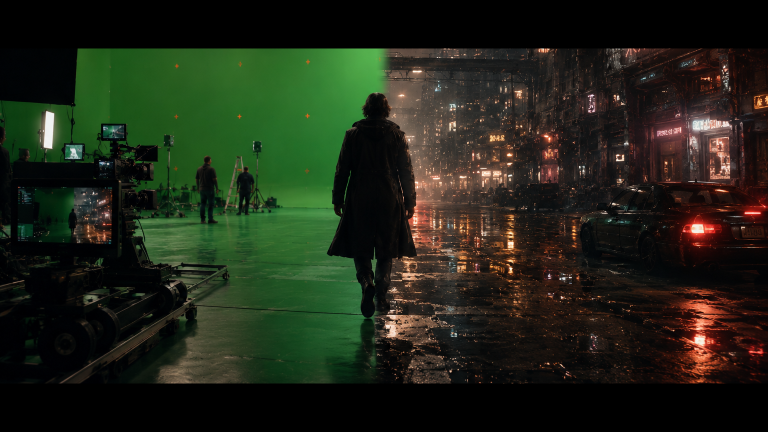
Here’s the part that should actually surprise you, because it’s the opposite of what the headline makes you assume. InterPositive isn’t a “type a prompt, get a movie” generator. According to Affleck’s own description, the tools use production dailies to build a model trained to understand visual continuity and editorial logic, then apply that to fix real, boring, expensive production problems — missing shots, background replacements, and inconsistent lighting. It’s not generating scenes from nothing. It’s patching holes in scenes that were already actually shot.
Affleck built the underlying model on a proprietary dataset captured on controlled soundstages specifically to teach it cinematic language, rather than scraping the open internet. And when he announced the deal, he leaned hard into a very specific pitch: technology has evolved alongside artists before — moving images, digital cameras, motion capture, virtual production — and this is supposedly just the next entry on that list, not a replacement for any of them.
Netflix isn’t being shy about how much it’s already leaning on this stuff, either. Co-CEO Ted Sarandos said on the company’s Q2 earnings call that roughly 300 Netflix titles have used some form of generative AI this year, with the heaviest concentration in post-production. The flagship example: the Tom Hanks-backed documentary The American Experiment, which used about 17 minutes of what Sarandos called “AI-enhanced” footage — produced twice as fast and at half the cost of traditional methods. Netflix also said it’ll keep the technology in-house rather than licensing it to rival studios, which tells you exactly how much competitive advantage they think they just bought.
Not everyone’s cheering, and it’s worth saying plainly: this deal landed weeks after Technicolor, one of the largest VFX companies on the planet and a key vendor for Disney, Paramount, and Netflix, collapsed under debt and abruptly shut down its India operations, leaving roughly 3,000 workers in Bengaluru and Mumbai without pay or severance. Industry analysts have pointed out that entry-level VFX and compositing roles are the ones most exposed to exactly this kind of tool, regardless of how carefully any individual company frames its intentions.
So here’s the real headline hiding under the celebrity name: one of Hollywood’s own — an actor, writer, and director with actual skin in the game — bet that the future of AI in filmmaking isn’t about generating the shot, it’s about rescuing the shot you already have. Whether that distinction holds up as more of these tools land in more productions is the thing actually worth watching, celebrity acquisition price tag aside.